High Engagement Guide for Instagram (2026)

Why Has Boosting Instagram Engagement Become So Difficult?
Let's be honest: increasing Instagram engagement in 2026 isn't what it used to be. A few years back, posting a nice photo and waiting was enough. Now the algorithm shifts, user behavior changes, competitors multiply. From what we've seen in practice, the vast majority of brands are still trying to move forward with 2020 tactics. The result? Disappointment.
Let's pause here for a moment. The matter of boosting Instagram engagement isn't just a technical issue. It's actually directly related to human psychology. Why do people comment on a post? Why do they react to a story? Chasing the algorithm without asking these questions is like building a house without a foundation.
Everyone Is Posting at the Wrong Times
Why am I saying this? Because most of the information circulating online about Instagram engagement times is either outdated or tailored to the American market. User behavior in different regions varies wildly.
Morning or Evening?
The general consensus says 8-9 AM and 7-9 PM are the most productive hours. But wait a second. Who is your target audience? College students? Working mothers? Business professionals? While working with an e-commerce brand, we noticed their customers were active during lunch breaks. They didn't fit the classic Instagram engagement time guides at all.
My clear advice is this: Spend the first two weeks posting at different times and collect your own data. Instagram's Insights section shows this anyway. Don't trust someone else's statistics.
The Content Format Debate: Reels or Carousel?
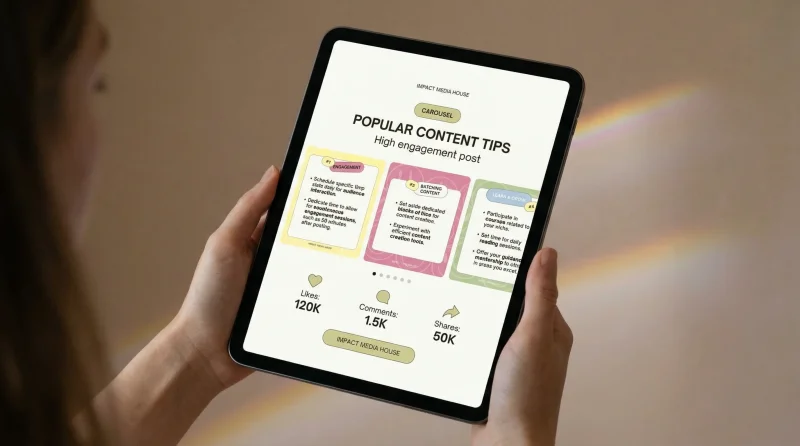
You might disagree on this, but I think carousel posts are still the most powerful format. Reels grab attention, sure. But when a user starts swiping through a carousel, they're making an investment. That investment increases the likelihood of commenting or saving.
Of course, getting stuck on a single format is also a mistake. Our clients usually miss this point: each format serves a different purpose.
- Reels → Landing on Explore, finding new audiences
- Carousel → Building deeper connections with existing followers
- Stories → Daily contact, showing a human face
- Single photo → Barely works anymore (sorry, but that's the truth)
If you're aiming to boost Instagram engagement, you need to use these three formats in balance. The ratio we recommend to clients is roughly this: 2 Reels per week, 2 carousels, daily stories. But this also changes by industry—every brand has different dynamics.

The Only Thing You Need to Know About the Algorithm
The algorithm isn't actually complicated. The basic logic is this: Instagram wants to keep users on the platform. If your content keeps people there, you're making the algorithm happy.
How do they measure this? Instagram's algorithm looks at several signals:
- Save rate - The most important metric in my opinion
- Share count - If someone sent it to a friend via DM, the content is valuable
- Comment length - If they're writing 2 sentences instead of just "Nice," that's good
- Watch time (for Reels) - If watched to the end, jackpot
Likes aren't as important as they used to be. We encounter this mistake frequently: brands get hung up on like counts. Yet a post with 50 likes but 200 saves is far more valuable than one with 500 likes and 10 saves.
How to Write Captions to Increase Instagram Engagement
The First Line Is Everything
The first line of your caption is like an email subject line. If you can't hold them there, no one reads the rest. Create curiosity, ask a question, say something surprising.
Long or Short?
I don't agree with those who say "shorter captions are better." Especially with carousel posts, long, valuable captions perform very well. But not meaninglessly long—every sentence should have a purpose.
There's also this: There should be a clear call to action at the end of your caption. Generic questions like "What do you think?" don't work anymore. Be more specific. Something like "How many times have you experienced this situation in the last month?"
Is Hashtag Strategy Dead in 2026?
No, it's not dead. But it has changed.
We used to throw in 30 hashtags and wait. Now Instagram sees that as spam. My observation is this: 5-8 genuinely relevant hashtags are sufficient. Don't go for hashtags with millions of posts—you'll drown. Niche hashtags with 10,000-500,000 posts yield better results.
Also, naturally placing hashtags within the caption looks better than piling them at the end. Both visually and in terms of the algorithm.
3 Mistakes That Kill Engagement
We see these mistakes so often that recognizing them has become reflexive:
First: Constantly sharing sales content. People don't come to Instagram to watch ads. Give value, then sell. This ratio should be roughly 80-20.
Second: Responding late to comments or not responding at all. Someone wrote you a comment, and you reply 3 days later. That person won't comment again. The first hour is especially critical—response time to comments matters as much as Instagram engagement times.
Third: Inconsistent posting. One week you post 7 times, then silence for 2 weeks. This causes the algorithm to categorize you as "unreliable." Just as consistency matters on your website, it matters equally on social media.
So What Should You Do Now?
There's no magic formula for boosting Instagram engagement. It's not pleasant to say, but that's the reality. However, brands that work systematically, test, and look at data definitely stand out.
Try this: For the next 30 days, note the performance of every post. Which format, which time, which topic gave better results? This simple exercise will provide insights more valuable than all the guides on the internet.
Let me add this too: trends in the digital world change rapidly. What worked 6 months ago might not work today. We see this often as well—inflexible strategies become outdated quickly.
Final thought: Boosting Instagram engagement is a marathon, not a sprint. Be patient but don't be lazy. If the foundations of your digital presence are solid, social media will settle into place over time. The question is whether you're willing to put in the daily work when nobody's watching.