Social Content vs Educational Content on Instagram
Instagram Content Creation: The Social vs Educational Debate
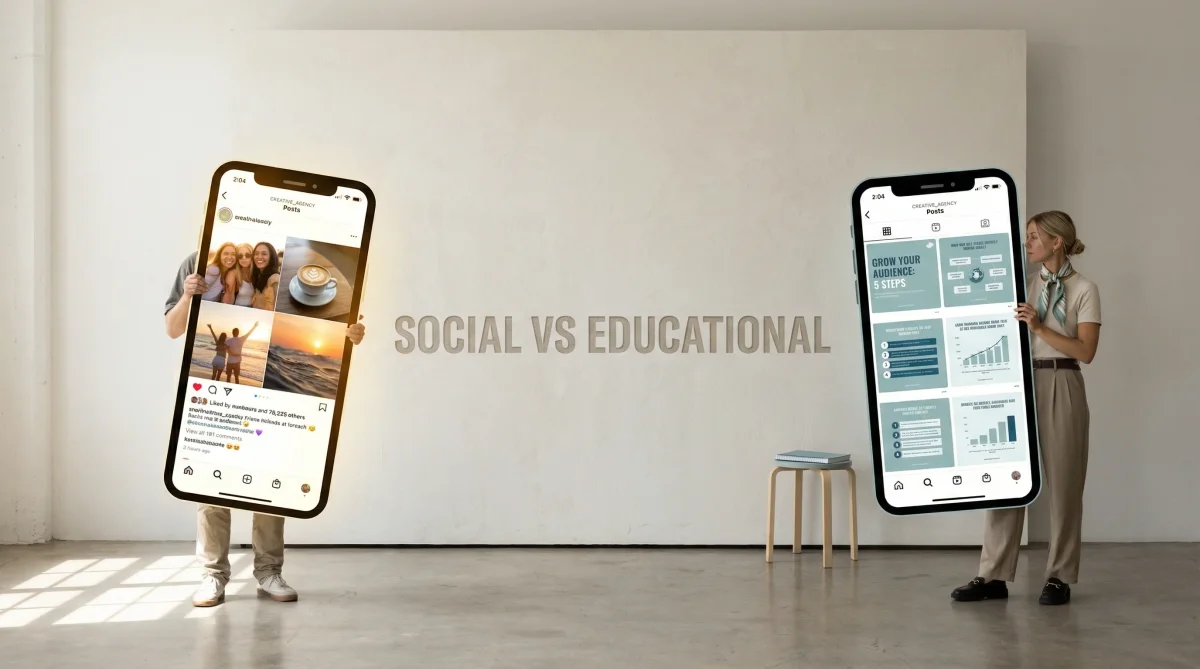
I've been watching this unfold for a while now: brands have split into two camps when it comes to Instagram content creation. One side screams "be fun, go viral!" while the other insists "add value, teach something." So who's right? Honestly, I think both sides are asking the wrong question entirely.
Here's what actually matters: Who is your follower and what do they want from you? Trying to build a content strategy without answering this is like setting sail without a compass. Yet most brands skip this step completely. They jump straight into tactics while ignoring the fundamentals.
Why Social Content Dominates Right Now
Trending sounds, dance videos, memes... These have become Instagram's oxygen. You post one Reel, and within 24 hours you're swimming in thousands of views. The dopamine hit is real. But then what happens? Absolutely nothing.
Let's pause here. The gap between views and conversions gets ignored far too often. Yes, social content boosts your chances of landing on the Explore page. But what do those people do after they follow you?
The Entertainment Trap
What we see in practice is this: most brands hit one viral piece and then desperately try to repeat the formula. By video five, views are dropping. By video ten, followers are wondering "what is this account even about?" Once consistency disappears, brand perception collapses with it.
A Real-World Example
Last year, we worked with a cosmetics brand that fell into exactly this trap. A viral makeup tutorial hit 2 million views. Amazing, right? They spent the next three months repeating the same format. The result: follower count went up, but sales flatlined. People followed for entertainment, not to buy anything.
Is Educational Content Actually More Valuable?
Carousel posts, infographics, "5 things you need to know" content... These absolutely crush social content when it comes to save rates. If you want high engagement, the save metric is now more critical than likes. Full stop.
But there's a catch.
Educational content carries a serious risk of being boring. B2B brands fall into this trap constantly. "Our industry is serious, entertainment doesn't fit," they say. The result? Posts that read like corporate brochures that nobody actually reads.
An Educational Content Case Study That Worked
We discovered something interesting working with a financial advisory firm. Their standard "investment tips" posts were getting minimal engagement. Same information, repackaged as "5 money truths my dad never taught me" and suddenly the save rate jumped dramatically. The information was identical—the presentation was everything.
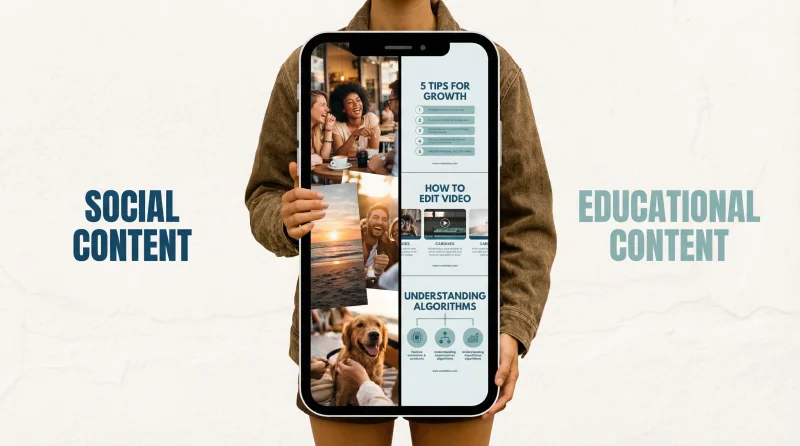
Does the Hybrid Model Actually Work for Instagram Content Creation?
"Just do both" sounds logical. But this approach usually fails. Why?
- Resources get spread thin, nothing gets done properly
- Your account's identity becomes unclear
- The algorithm gets confused—which audience should it show your content to?
Here's what we've noticed across Instagram content creation projects: the hybrid model only works when you set a clear ratio. Something like 70% educational, 30% social. Or the reverse. Equal distribution is a recipe for chaos.
Which Ratio Fits Your Business?
This depends entirely on your business model. Running e-commerce and want quick sales? Go heavy on social content. Selling consulting, education, or B2B services? Educational content should lead. Your content marketing strategy has to align with your business goals, or no tactic will save you.
Ratio Recommendations by Industry
Based on what we've seen work:
- E-commerce: 60% social, 40% educational
- Service businesses: 70% educational, 30% social
- Personal brands: 50% educational, 50% social
- B2B companies: 80% educational, 20% social
What Does the Algorithm Actually Favor?
As of 2026, Instagram's algorithm heavily weights watch time and saves. Translation: content that gets watched longer and saved more gets pushed to more people.
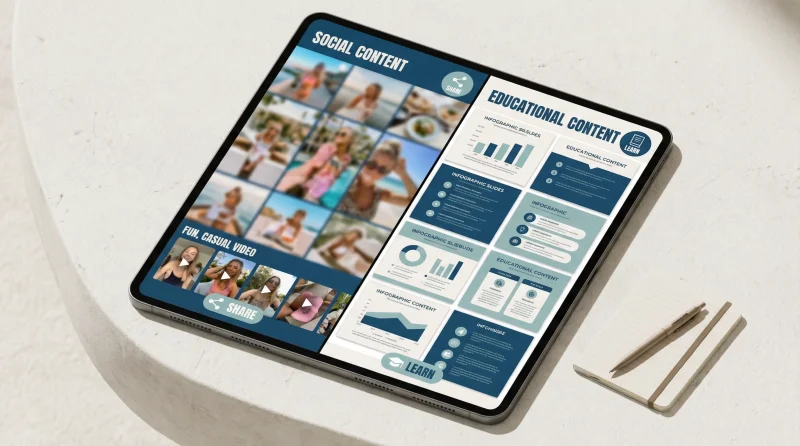
Social content typically gets consumed fast—watch, laugh, scroll. Educational content gets consumed slower but saved more often. The algorithm values both, just differently.
Here's the real distinction, in my view: social content attracts new audiences, educational content retains existing ones. You need both, but which stage you're at determines your priorities.
Practical Advice for Instagram Content Creation
Let's talk specifics. After years in this industry, here's what I can tell you:
When Creating Social Content
Trend-watching is essential, but don't chase every trend blindly. Jumping on everything dilutes your brand identity. If a trend fits your message, use it. If it doesn't, skip it. Expensive production isn't necessary either—a phone camera and decent lighting will do.
When Creating Educational Content
Don't be boring. That's it. That's the advice. Delivering information doesn't mean being monotonous. Create curiosity in your headline, hook them in the first sentence, keep them reading until the end. Simple explanations beat complicated jargon every single time.
Build a Content Calendar
Random posting is one of the biggest mistakes out there. Create a weekly content calendar. Monday for educational carousels, Wednesday for trending Reels, Friday for Q&A stories. This structure disciplines you and teaches your followers what to expect.
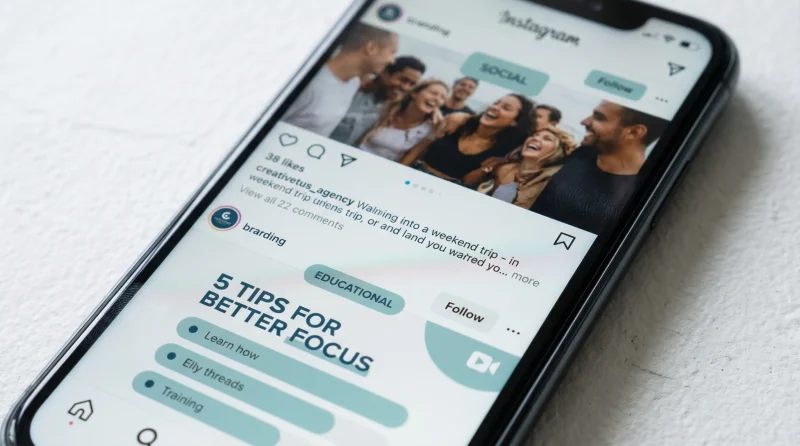
So Which Should You Choose?
Let me be direct: if you're a new account trying to gain followers, start with social content. Let the Explore algorithm learn who you are. Let people discover your account. Then gradually shift toward educational content.
If you already have an audience and want sales or conversions, make your Instagram content creation strategy education-heavy. Build trust. Demonstrate expertise.
Content is fire, social media is gasoline.- Jay Baer, Convince & Convert
This quote captures the whole point, really. Content is the fire, social media is the gasoline. Without fire, pouring gasoline accomplishes nothing. First have something valuable, then spread it.
Final Thoughts: Test, Measure, Adapt
Here's what we always tell clients: Instagram content creation isn't a one-size-fits-all formula. The strategy that works for you might be a disaster for your competitor.
Spend three months testing different content types. Which gets more saves? Which brings followers? Which generates DMs with questions? The data will guide you.
And remember this: Instagram changes constantly. What works in 2026 might be worthless by 2027. Stay flexible—or get left behind.