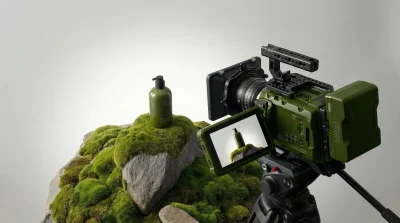
Important Details in Product Photography: Guide for Professional Results
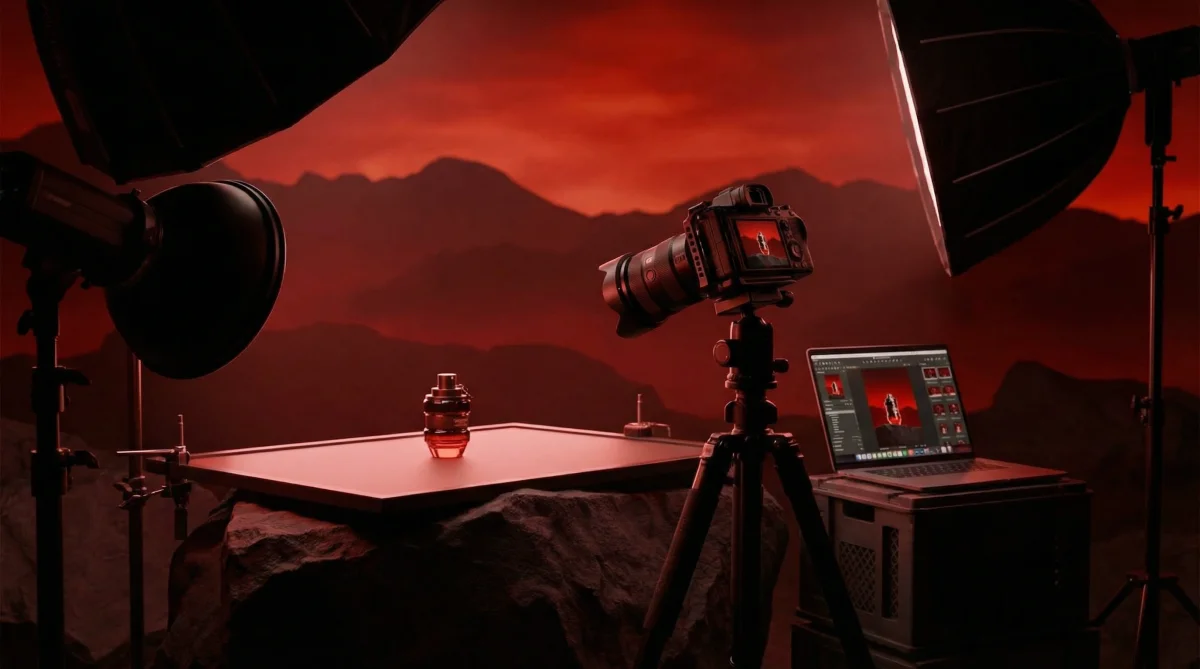
Why Is Product Photography So Frustratingly Difficult?
You've got a product in hand, a phone or camera ready to go. You snap the shot. The result? Usually disappointment. Product photography looks deceptively simple from the outside, but once you're in it, you realize it's an entirely different beast. Light, background, angle, shadow control... each one is its own specialty.
Here's what I think the real problem is: Most people see product photography as "just taking pictures." But it's actually about telling your product's story. Photograph a perfume bottle straight-on with flat lighting and what do you get? Nothing. But when you hit that bottle with the right light, when you control the reflection on that glass surface, that's when the product starts speaking.

Light Control: The Foundation of Everything
Light is the most debated topic in photography. Natural or artificial? Hard or soft? There's no definitive answer to these questions, but I'll say this: Wrong lighting makes even the best product look cheap.
Natural Light or Studio Light?
People shooting product photos at home usually gravitate toward the window. Makes sense, especially on a tight budget. But here's the catch: Natural light isn't constant. The photo you take at 10 AM will have completely different tones than the one at 2 PM. If you're running an e-commerce operation, this inconsistency creates chaos on your product pages.
Studio lighting gives you consistency. Expensive? Starter kits aren't as pricey as you'd think. And once you've set it up, you can replicate the same result every single time.
Using a Diffuser
To soften light, a diffuser is essential. Hard light creates harsh shadows, and those shadows kill product details. A softbox or even a simple white curtain can do the job.
Background Choice Can Make or Break Your Product
E-commerce platforms generally want white backgrounds. Amazon, eBay, Etsy... they all say the same thing: Pure white, no distractions. But is this always the best choice?
I don't think so. White backgrounds are ideal for catalog shots, but for social media content they feel sterile. Showing a product in a living space, in the moment of use, is sometimes far more effective. When you show a coffee mug not on a white backdrop but on a wooden table with steam rising—that's when the sales story begins.
Of course, you need balance here. The background shouldn't overshadow the product. The most common mistake we see in practice? The background is so interesting that the product disappears.
What Equipment Do You Actually Need for Product Photography?
"What's the best camera?" is the wrong question. The right question is: "How can I use what I already have most effectively?"
- Tripod: Prevents shake, ensures consistent angles. Even a cheap tripod beats no tripod.
- Light source: Two LED panels are enough to start. Even better with softboxes.
- Background paper or backdrop: White, gray, or black—three colors cover most needs.
- Reflector: To fill in shadows. Even white foam board works.
As for cameras: In 2026, smartphone cameras have become incredibly capable. While a professional DSLR or mirrorless camera is ideal, you can achieve surprising results with an iPhone or Samsung Galaxy under good lighting conditions. We generally recommend a hybrid approach—professional equipment for catalog shoots, smartphones for social media content can be perfectly adequate.
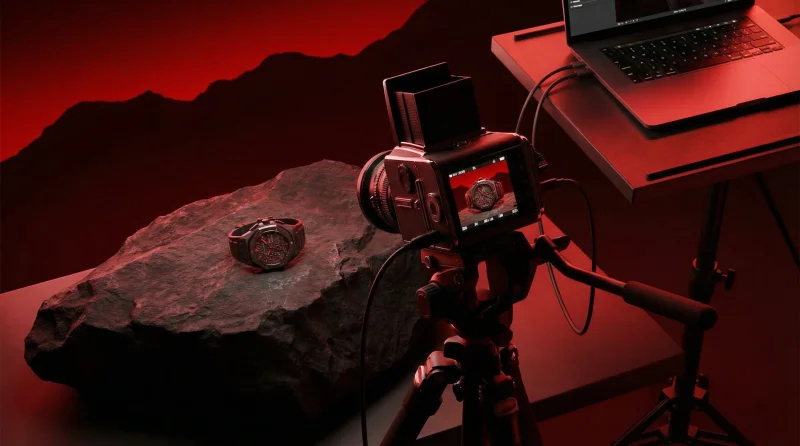
How Are E-commerce Product Photography Prices Determined?
This is one of the most common questions we hear. Why do prices vary so wildly? One place quotes $30, another asks for $300.
The answer isn't simple, but these factors are decisive:
- Product complexity (a t-shirt and a watch aren't the same)
- Number of shots and angle variety
- Post-production (retouching, color correction, background removal)
- Usage rights
- Delivery timeline
Here's what you need to understand about e-commerce product photography pricing: The cheapest option is rarely the most economical. Bad photos decrease sales and increase return rates. When you factor in those costs, the "expensive" professional shoot actually pays for itself.
Can You Really Shoot Product Photos at Home?
Absolutely. In some cases, it might even be preferable.
Shooting product photos at home works best under these conditions: small products (jewelry, cosmetics, accessories), low volume, social media-focused use. If these conditions apply, a simple home setup can get the job done.
But let me be clear about something: Home shooting isn't "free." You're spending time. There's a learning curve. You run experiments, most of them fail. That time has a cost, and it's usually not calculated.
The question of whether expensive production is always necessary comes into play here too. My answer: It depends on your goal. If you want organic growth on Instagram, authentic-looking home shots can sometimes outperform professional studio images.
Common Mistakes and How to Fix Them
Over-Retouching
You retouch the product so much it disconnects from reality. Customer receives the item and feels disappointed. That means returns. Retouch, yes, but preserve the product's natural appearance.
Inconsistent Style
One product on white background, another on a wooden table, a third shot outdoors. Your e-commerce site or social media page looks like a mess. Consistency creates the perception of professionalism.
Wrong Angle
Every product has a "good" angle. Shoes generally look best at 45 degrees, watches from above, clothing laid flat or on a mannequin. Finding these angles requires experimentation.
What Does the Future Hold for Product Photography?
AI tools are transforming product photography. Background removal, light correction, even generating angles that don't exist... all of this is now possible. But I don't think product photography will become fully automated. What the human eye captures, knowing how to make a product "feel" right—those are still human skills.
If you want to create attention-grabbing ad content in digital marketing, you first need attention-grabbing visuals. And those visuals need to be original, not AI-generated stock photos.
"Photography deals exquisitely with appearances, but nothing is what it appears to be."- Duane Michals, Wikipedia
Product photography is the same. Capture your product's reality, but interpret it in the best possible way. Technical knowledge matters, equipment matters, but the real issue is being able to tell your product's story. If you can't tell that story, the most expensive camera in the world won't save you.