Key Tips to Know When Getting Product Video Shooting Services
Why Product Video Shooting Got So Complicated
A few years back, product video shooting meant something straightforward: a product, a camera, decent lighting. That's it. Now? Completely different beast. Platforms multiplied, formats shifted, viewer expectations skyrocketed. The video you prepare for an e-commerce site and the one you shoot for social media ads might as well be from different planets.
Here's the real problem: Most brands don't actually know what they need when getting product video shooting services. They say "let's make a video" and dive in, then the final result doesn't meet expectations. I've seen this happen dozens of times. This article tackles exactly that. What you need to clarify before hiring anyone, questions to ask agencies, and mistakes we see constantly in this industry.
Questions You Must Ask Yourself Before Product Video Shooting
You have homework before approaching video production companies. Skip this homework, and the proposal you receive probably won't fit your actual needs.
Where Will This Video Be Published?
A video shot for YouTube ads won't work on Instagram Reels. The logic behind YouTube advertising differs from social media's rhythm entirely. Even within the same platform, placements demand different formats. The difference between a feed video and a Story video isn't just about dimensions.
There's more: A product promotional video for your website follows different rules than one for your Amazon or marketplace store. E-commerce platforms have their own specifications, duration limits, even banned content lists. I think many brands underestimate how strict these guidelines have become.
Who Is Your Target Audience?
Don't say "everyone." That answer is useless. A cosmetics brand targeting 25-year-olds and a B2B industrial equipment company can't use the same video tone. Energetic music and fast cuts work for one; detailed technical demonstrations and slower pacing work for the other.
How Does Professional Video Production Actually Work?
You agreed with an agency, talked money, shook hands. What happens next? Most clients stay in the dark here, and this causes serious problems.
First comes pre-production. Script writing, storyboard sketching, location and equipment decisions. Some agencies take this phase seriously; others wing it with a "we'll figure it out on shooting day" mentality. In my experience, the more time dedicated to pre-production, the better the outcome. Always.
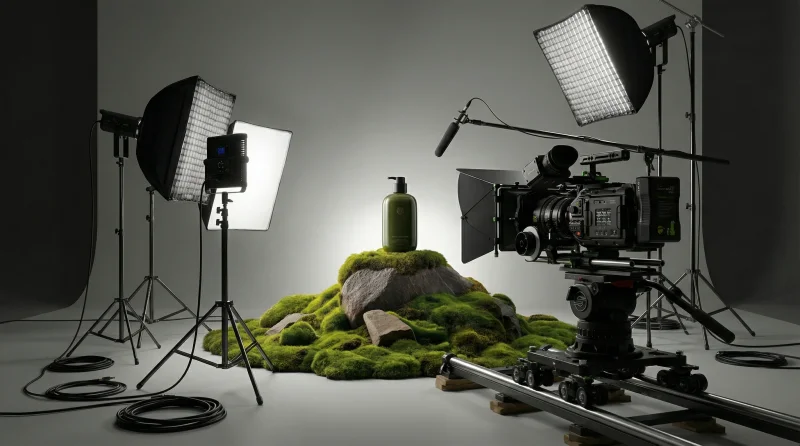
Shooting day is another world entirely. Lighting setup, product placement, camera angles, movement plans... A professional product video shooting set involves dozens of decision moments. Most of these decisions depend on preparation done beforehand. I've watched shoots derail because nobody planned simple things like which product variants to feature first.
Post-production—editing and color correction—usually takes the longest. This is where revision cycles begin. How many revisions are you entitled to? Critical question. It must be in the contract.
What Actually Determines Product Video Shooting Prices?
Nobody likes talking prices, but everyone wants to know. Let me be direct: Product video shooting prices vary wildly, and this gap doesn't always have a logical explanation.
Key factors affecting price:
- Shooting duration: Half-day set versus three-day set means serious cost difference
- Equipment quality: 4K cinema camera or standard DSLR?
- Crew size: One-person shoot or full team with director, cinematographer, lighting tech, sound engineer?
- Location: Studio, outdoor, special venue?
- Post-production complexity: Simple editing or motion graphics, animation, special effects?
And here's something people forget: Expensive production doesn't guarantee high views. Sometimes a simple but correctly structured video outperforms million-dollar productions. I've seen a smartphone-shot video outperform a $50,000 commercial because the messaging was sharper.
Choosing the Right Agency
Portfolio review isn't enough. Yes, looking at previous work matters, but the real question is: What budget, timeline, and revision count produced those projects? Making decisions without this information is risky.
Working with agencies experienced in both digital marketing and production—like Pixor Digital—has an advantage: They evaluate videos not just aesthetically but for performance. Because ultimately, if a beautiful video doesn't convert, it's pointless.
Three Critical Questions to Ask
First: "Have you worked in a similar industry before?" Shooting food videos and electronics videos require different expertise.
Second: "Do I keep the raw footage?" Some agencies won't hand over raw files. This can become a problem later.
Third: "How are copyright rights structured in the contract?" Do you have rights to use the video anywhere, or will you pay extra per platform?
Why Creative Briefs Matter More Than You Think
If you want to create an attention-grabbing ad structure, start with a solid brief. The brief is like the project's DNA. It should contain your brand voice, goals, expectations, and things you absolutely don't want.
The biggest mistake we see in most projects: Client can't articulate what they want, agency hesitates to ask questions. The result satisfies nobody. The more detailed the brief, the fewer surprises.
What a brief needs: Brand identity summary, target audience definition, video purpose (sales, awareness, education?), competitor examples, liked and disliked references, budget range, and timeline.
Practical Tips for Shooting Day
When preparing your products for video shooting, details matter. Especially with reflective surfaces (glass, metal, plastic), fingerprints and dust become major issues. Clean products professionally before arriving at set.
Most rules from product photography apply to video too—video is actually more demanding. The camera moves, captures multiple angles.
Having an authorized decision-maker on set during shooting day is essential. "We'll review later" costs money. Dozens of things require same-day decisions, and most aren't technical—they're strategic.
What Happens After Delivery?
Video delivered, you loved it, published it. Story doesn't end here. Working with digital advertising integration, running A/B tests, trying different versions—this is standard practice now.
A product video shooting project's success isn't measured just by video quality but by how that video gets used. Content optimized for Google Ads video campaigns performs differently than content prepared for organic sharing.
One more thing: Video content isn't static. A video shot in 2026 might look dated by 2028. Plan your refresh schedule now. Good product video shooting investment, in the right hands, delivers long-term returns. Just ask the right questions from the start and work with the right partner. Otherwise, you're gambling with your budget—and in my experience, the house usually wins.