10 Most Common Logo Design Mistakes and Solutions
Why Do So Many Logo Projects Fail?
I've been watching logo design projects crash and burn for years. I've seen the brilliant ones too, but let's be honest – the failures outnumber the successes by a wide margin. And here's what I've learned: most logos don't fail because the designer lacks talent. They fail because the process is broken, expectations are delusional, or fundamental mistakes get ignored.
A logo is a brand's face. It's also the most argued-over design element in existence. Everyone has an opinion. The boss doesn't like it. The spouse doesn't like it. The intern who started last week definitely has thoughts. In this chaotic environment, producing a logo that actually works is harder than most people realize. But it's not impossible.
Let's look at the mistakes I see constantly – and how to fix them.
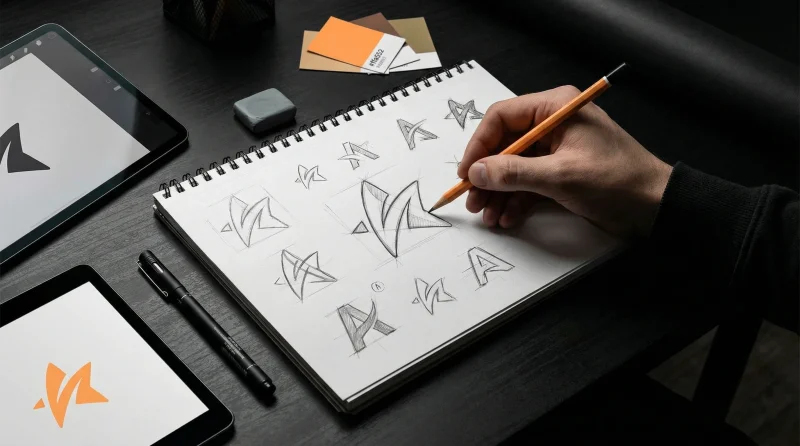
Too Much Detail: The Cardinal Sin of Logo Design
This is the big one. Designers (or more often, clients) want to cram everything into the logo. The company's history, its vision, three different product categories, the founding year, maybe a subtle nod to the CEO's favorite hobby...
Stop. A logo is not a novel.
The most effective approach during any logo design process is to question every single element you want to include. Ask yourself: "Would this logo still work without this element?" If the answer is yes, cut it. Think about the Nike swoosh – what's in it? Nothing. Just a sense of movement. That's it. And it's one of the most recognized symbols on the planet.
The Practical Fix
Imagine your logo in fax quality, black and white. Can you still recognize it? If not, you've got too much detail. Simplicity isn't laziness – it's discipline.
What Goes Wrong With Font Selection?
Font selection in graphic design is a specialized skill. But most people approach it with "this looks nice" logic. Here's the problem: a nice-looking font isn't always the right font.
A handwritten script for a law firm? I've seen it. A gothic font for a children's daycare? Seen that too. Both were disasters.
- Script fonts: Great for luxury or feminine brands – but readability suffers at small sizes
- Sans-serif: Modern and clean – but can feel characterless if you're not careful
- Serif: Traditional and trustworthy – but risks looking dated
- Display fonts: Eye-catching – but often tied to short-lived trends
When choosing a font, think about your brand's personality, not the designer's personal taste. Those are rarely the same thing.
Misunderstanding Color Psychology
"Blue builds trust." Everyone's heard this cliché. But here's what nobody asks: if everyone uses blue, what happens? Nobody stands out.
When you study successful logo design examples, you'll notice that winning brands sometimes deliberately break industry norms. T-Mobile choosing magenta wasn't an accident – when every telecom company was using blue or red, pink was a bold move. A risky one. It worked.
What to Consider When Picking Colors
Map out your competitors' color palettes. Then consider going the opposite direction. This doesn't mean "be randomly different" – it still needs to align with your brand. But using the same colors just because it's the industry standard is a major mistake.
Also: your logo must work in a single color. Colors change, printing conditions vary, and backgrounds differ. A logo that depends entirely on its colors is a weak logo.
Blindly Following Trends
Gradient logos exploded in the early 2020s. Everyone wanted gradients. Now, in 2026? Many of those brands are already looking for ways to change their logos.
The W3C accessibility standards even emphasize caution with gradient usage. Contrast issues, inconsistent appearance across screens – the problems add up.
There's a serious difference between following trends and creating timeless design. A logo should be wearable for at least 10 years. Trendy logos typically look dated within 3. I think designers know this instinctively but often get pressured by clients who saw something cool on Instagram last week.
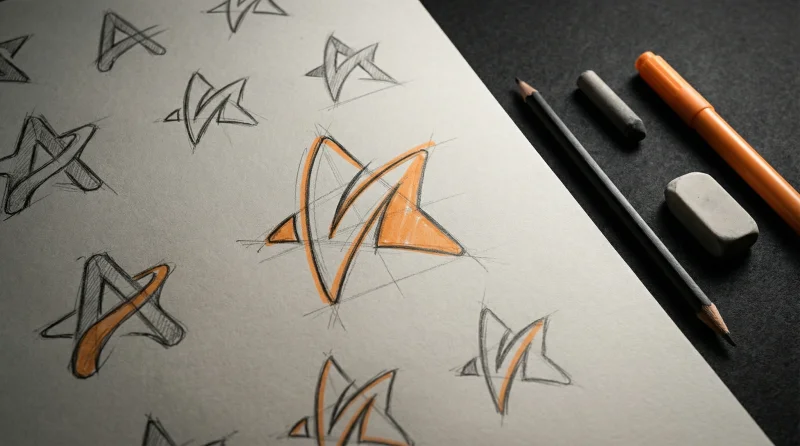
The Scalability Problem Nobody Tests For
The logo looks fantastic on the designer's screen. Then it gets printed on a business card – disaster. The website favicon gets created – unrecognizable. It goes on a billboard – pixelated mess.
Why does this happen so often? Because the design process typically happens at a single size. Nobody bothers to test until it's too late.
Build a Test Matrix
Test your logo at these sizes:
- 16x16 pixels (favicon)
- Business card size
- A4 letterhead
- Large banner (at least 6 feet wide)
Is it readable and recognizable at all of them? If not, you've got a problem that won't fix itself.
Mismanaging Client Feedback
"Make it more pop." What does that even mean? "A bit more vibrant." In what sense?
Client feedback might be the hardest part of the logo design process. The issue is that clients usually don't know what they want. If they did, they wouldn't need a designer. But following the "customer is always right" mentality and implementing every piece of feedback creates Frankenstein logos.
The solution? Ask better questions when gathering feedback. Instead of "Do you like it?" try "What would this logo make your target audience feel?" That shifts the conversation from personal taste to strategic thinking. It doesn't always work – some clients just want what they want – but it helps more often than you'd expect.
Skipping Competitor Analysis (Or Overdoing It)
Two extremes exist here. First: not looking at competitors at all. Result? Creating something that looks like a logo already in your industry. Second: looking at competitors too much. Result? Creating what looks like a copy of theirs.
The right approach isn't somewhere in the middle – it's somewhere else entirely. Know your competitors, but not to get inspired by them – to differentiate from them.
"Good artists copy, great artists steal."- Attributed to Pablo Picasso, Quote Investigator
But don't misunderstand "steal" here. What Picasso meant was taking ideas and transforming them into something entirely your own. Not lifting someone else's work and changing the colors.
Not Working in Vector Format
There are still agencies delivering logos in PNG or JPEG format. In 2026, this is unacceptable.
Without vector format (AI, EPS, SVG), a logo can't scale properly, can't be edited cleanly, and can't adapt to different media. Every professional agency works in vector – because anything else doesn't make sense. This isn't a technical detail; it affects your brand's future. You'll need that logo at sizes you haven't even thought of yet.
One Final Question
Can you avoid all these mistakes if you know about them? Of course. But the real question is: how much time and resources are you willing to invest in your logo?
A good logo design process takes weeks, sometimes months. Briefing, research, sketching, revision, testing... Try to do it in a day or a week, and you'll fall into several of the traps above. Guaranteed.
When you look at your current logo, which of these mistakes do you see?